Materials & Surface Finishing
6061 vs 7075 Aluminum for CNC Machining | KSHCNC
Compare 6061 and 7075 aluminum for CNC machining, including strength, machinability, welding, anodizing, material cost and T6 vs T651 temper.
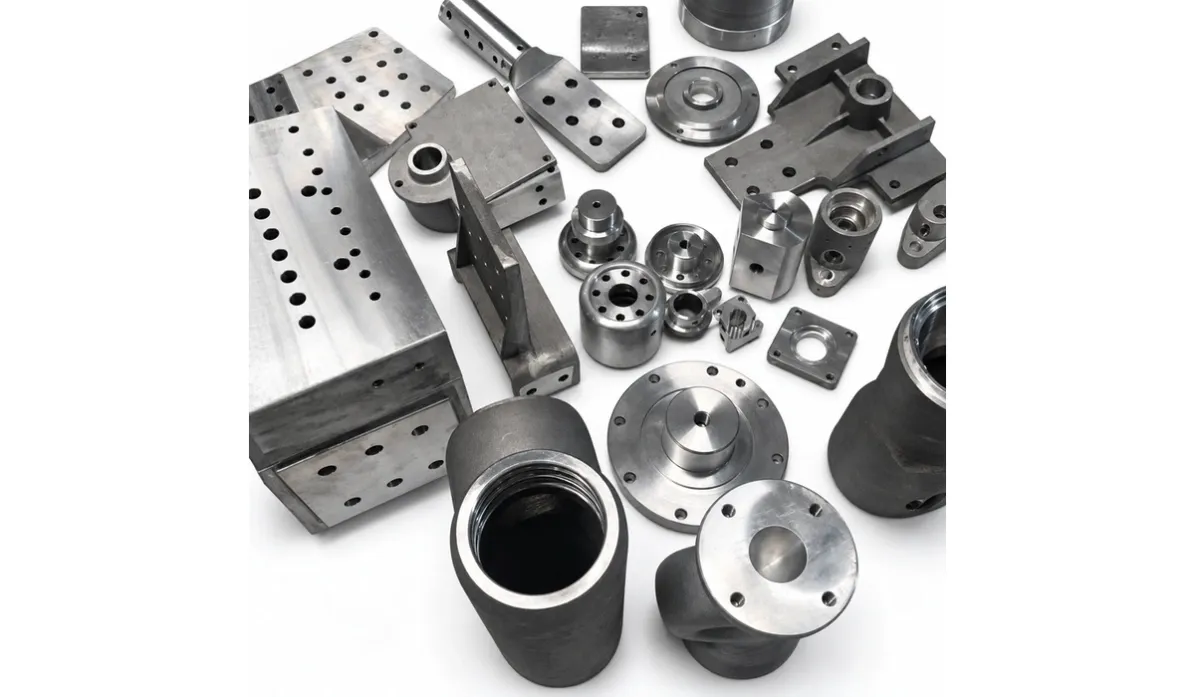
6061 or 7075: Choosing Between the Two Most Common CNC Aluminum Grades
Two aluminum grades appear frequently in custom CNC machining inquiries: 6061 and 7075. Both are proven materials, but they solve different engineering problems.
6061 offers a practical balance of machinability, corrosion resistance, surface finishing and cost. 7075 provides substantially higher strength where component size and weight are limited.
Choosing the right alloy is not about selecting the strongest material available. It is about understanding what the part actually needs: mechanical strength, dimensional stability, weldability, appearance or cost efficiency.
1. 6061 Aluminum: The Practical Choice for General CNC Parts
6061 is widely used for custom CNC machined components because it combines good machinability, corrosion resistance, reasonable strength and broad material availability.
It is commonly supplied in T6 or T651 temper, depending on the product form and manufacturing requirements.
Typical applications include:
- Machine brackets and mounting plates
- Electronic and sensor housings
- Hydraulic manifolds
- Industrial fittings and covers
- General structural components
6061 is also a good option when parts require welding or decorative anodizing. However, welding can reduce strength in the heat-affected zone, so the finished assembly must be evaluated accordingly.
For many industrial components, 6061 is not a compromise. It is simply the more economical engineering choice.
2. 7075 Aluminum: When Higher Strength Is Required
7075 is a high-strength aluminum alloy containing zinc as its principal alloying element.
In commonly specified T6 conditions, 7075 provides significantly higher yield and tensile strength than 6061 while maintaining a similar density.
This makes it suitable for selected applications such as:
- High-load structural components
- Precision clamping mechanisms
- Compact mechanical links
- High-strength fixtures
- Weight-sensitive industrial parts
However, higher strength comes with trade-offs.
7075 generally costs more than 6061, has poorer fusion weldability and offers lower natural corrosion resistance in many environments.
Its anodized appearance can also differ from 6061, especially when clear or light-colored decorative finishes are required.
If the component does not require the additional strength, specifying 7075 may increase cost without delivering a meaningful performance benefit.
3. 6061-T6 vs. 7075-T6: Engineering Comparison
The following table summarizes typical material characteristics relevant to CNC machining and purchasing decisions.
Property | 6061-T6 | 7075-T6 |
Main alloying elements | Magnesium, silicon | Zinc, magnesium, copper |
Typical yield strength | ~276 MPa | ~503 MPa |
Typical tensile strength | ~310 MPa | ~572 MPa |
Density | ~2.70 g/cm³ | ~2.81 g/cm³ |
Machinability | Good | Very good |
Fusion weldability | Generally good, with strength considerations | Generally poor |
Corrosion resistance | Generally better | More application-dependent |
Decorative anodizing | Often easier to achieve consistent appearance | Greater risk of color variation |
Relative material cost | Lower | Higher |
Engineering Note: The values above are typical references rather than guaranteed minimum properties. For load-critical components, always confirm the applicable material standard, product form, thickness range and material certification.
Also, higher strength does not mean substantially higher stiffness. The elastic moduli of 6061 and 7075 are relatively similar, so switching to 7075 alone may not solve a deflection problem.
4. T6 vs. T651: Why Temper Matters in CNC Machining
Material grade is only part of the specification. Temper condition can also influence machining results.
T6 refers to a solution heat-treated and artificially aged condition.
T651 includes an additional stress-relief operation by stretching, which can help reduce residual stress in suitable wrought product forms.
This distinction matters when machining:
- Large flat plates
- Thin-wall housings
- Deep pockets
- Parts requiring extensive material removal
- Components with demanding flatness requirements
Removing a large amount of material can redistribute residual stress and cause distortion after machining or unclamping.
Using an appropriate stress-relieved material condition may reduce this risk, but it does not eliminate it.
Machining sequence, workholding, stock allowance and intermediate stress-relief strategies may also need to be considered.
For dimensionally sensitive components, specify the exact alloy, temper and product form rather than simply writing “6061 aluminum” or “7075 aluminum” on the drawing.
5. Anodizing and Welding: Two Important Design Considerations
Anodizing Appearance
Both 6061 and 7075 can be anodized, but their alloy compositions influence the final appearance.
6061 is often preferred for components requiring consistent decorative finishes.
7075 may produce a darker, yellowish or less uniform appearance under certain anodizing conditions, particularly with clear or light-colored finishes.
For appearance-critical components, confirm the finishing specification and approve a representative sample before production.
Welding Requirements
6061 is generally more suitable for conventional fusion welding than 7075.
However, welding 6061 can reduce mechanical strength near the weld, and the design must account for this effect.
7075 is generally not recommended for conventional fusion welding because of its susceptibility to cracking.
If the component will be welded after machining, material selection should be reviewed before finalizing the drawing.
6. What Actually Affects the CNC Machining Cost?
The alloy grade influences quotation cost, but raw material price is only one factor.
Material Availability
6061 is commonly available in a broad range of bar and plate sizes. Depending on the market and required dimensions, 7075 may involve additional sourcing cost or lead time.
Material Utilization
A component machined from an oversized block may generate substantial material waste. This becomes more expensive when using a higher-cost alloy.
Machining Strategy
Both alloys machine well, but cutting parameters, tool selection, part geometry and production quantity influence machining time.
Surface Treatment
Decorative anodizing, hard anodizing and additional finishing requirements can affect the final quotation.
Dimensional Requirements
Thin walls, deep cavities, tight tolerances and demanding flatness specifications may require additional machining operations or inspection.
For purchasing teams, the most useful question is not simply “Which alloy is cheaper?” but “Which alloy meets the drawing requirements at the lowest practical manufacturing cost?”
7. How to Choose Between 6061 and 7075
For most general industrial CNC parts, 6061 is a sensible starting point.
Consider 7075 when the design requires higher yield strength, particularly where weight or available space limits the component dimensions.
Before finalizing the material specification, review these questions:
- What mechanical loads will the component experience?
- Is yield strength or stiffness the primary design concern?
- Does the part require welding?
- Is cosmetic anodizing important?
- Will extensive material removal create distortion risks?
- Is the additional material cost of 7075 justified?
If the answer is uncertain, share the operating conditions and critical drawing requirements with your machining supplier before placing an order.
Custom Aluminum CNC Machining at KSHCNC
KSHCNC supports custom CNC machining projects involving aluminum components for industrial equipment, hydraulic systems and mechanical assemblies.
We work with manufacturing resources suited to different part geometries, machining requirements and production quantities.
For aluminum machining inquiries, we can review material specifications, drawing requirements, machining feasibility and applicable finishing options.
Dimensional tolerances, inspection requirements and material documentation should be confirmed according to the specific project.
Need a Quote for Custom Aluminum Parts?
Send us your 2D/3D drawings, required alloy and temper, order quantity, critical tolerances and surface finish requirements.
Our team can review the project and discuss suitable manufacturing options.