Valve Selection Guide
Servo Valve vs Proportional Valve: Key Differences Explained
Servo valve or proportional valve? A plain-language comparison of control quality, feedback, cost and maintenance for engineers and buyers.
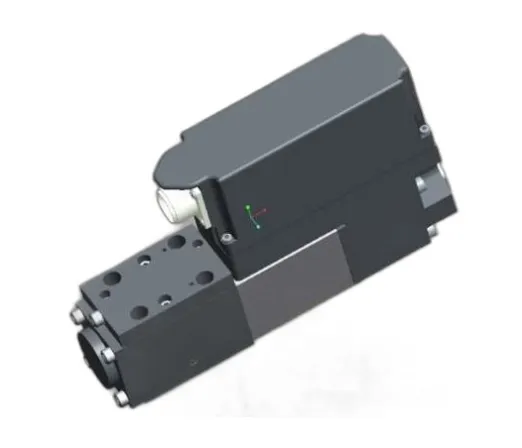
The terms servo valve and proportional valve are often used interchangeably, and in practice the border between them has become blurry. Both modulate flow or pressure continuously in response to an electrical signal, and many modern valves combine technologies from both families. For an engineer specifying a hydraulic axis, though, the practical differences still matter: repeatability, response, contamination tolerance and cost. This article explains where the two valve types came from, how they differ today, and how to decide which one your application needs.
Technical Explanation: Two Families, One Goal
Classically, a servo valve is a two-stage device with a fine mechanical feedback path: a torque motor drives a pilot stage (flapper-nozzle or jet pipe), which positions the main spool with very high precision. Servo valves offer extremely fast response and low hysteresis, but they demand very clean oil, typically ISO 4406 classes around 14/11 or better, and careful handling. A proportional valve, by contrast, grew out of directional valve technology: proportional solenoids move the spool directly (one stage) or through a pilot stage (two-stage), with more robust construction and more generous clearances.
Modern electro-hydraulic valves increasingly blur the line. Many valves sold as proportional valves today include spool-position feedback (an LVDT on the spool) and closed-loop electronics, which were servo-valve hallmarks. The JINFA VED series, for example, are proportional servo valves: direct- or two-stage designs with integrated LVDT closed-loop control and a zero-lap spool, factory pressure-tested up to 450 bar with a 350 bar maximum working pressure. When comparing datasheets, look at the actual performance figures - hysteresis, step response, repeatability - rather than the family name.
Key Selection Factors
Four questions separate the two families in practice. How clean is the oil in the machine? A servo valve rewards excellent filtration; a direct-operated proportional valve tolerates typical industrial cleanliness classes better. How fast must the valve respond? For closed-loop position or force control with high dynamics, servo-grade performance is worth the cost; for speed or pressure regulation with moderate dynamics, a proportional valve is usually sufficient. What repeatability does the process need? Applications such as testing machines benefit from LVDT closed-loop control. And what does the valve cost to own? Two-stage servo-type valves cost more to buy and to keep clean, while direct-operated proportional valves are simpler to maintain and replace.
Common Applications
Servo valves dominate in aerospace actuation, turbine control, plastics machinery with high dynamic requirements, and testing systems. Proportional valves cover the broad industrial middle ground: hydraulic power units, presses, injection moulding clamp and injection axes, marine steering and winch drives, and mobile machinery. In many machines both types appear side by side - a proportional valve for general motion control and servo-grade valves on the axes with the tightest performance requirements.
Practical Tips
Check the spool overlap: a zero-lap spool responds around null with minimal deadband, which matters for closed-loop control, while a positive-overlap spool holds position but adds deadband. Ask for the hysteresis and step-response figures at your actual pressure and flow, not only the catalogue values. Confirm the feedback type - open-loop solenoid control, or LVDT position feedback - because it directly affects repeatability. And when replacing a valve, photograph the nameplate: the model code encodes the spool type and electronics, which prevents ordering a visually similar valve with different control behaviour.
How JINFA Supports Customers
JINFA, the hydraulic valve brand of KSHCNC in Kunshan, China, manufactures proportional servo valves from NG6 to NG25 that combine proportional-valve robustness with servo-grade features such as LVDT closed-loop control. Because KSHCNC manufactures its own valves with in-house machining, forging, assembly and testing, we can discuss trade-offs like spool overlap, filtration class and response requirements concretely. Not sure whether a servo valve or a proportional valve fits your machine? Send us your application details or the existing valve nameplate, and we will reply with an initial recommendation within 24 hours. More comparison guides are available in our Technical Resources section.