Hydraulic Valve Basics
What Is a Proportional Hydraulic Valve? Working Principle and Applications
A practical introduction to proportional hydraulic valves: how they work, how to select one, and where they are used in industrial machinery.
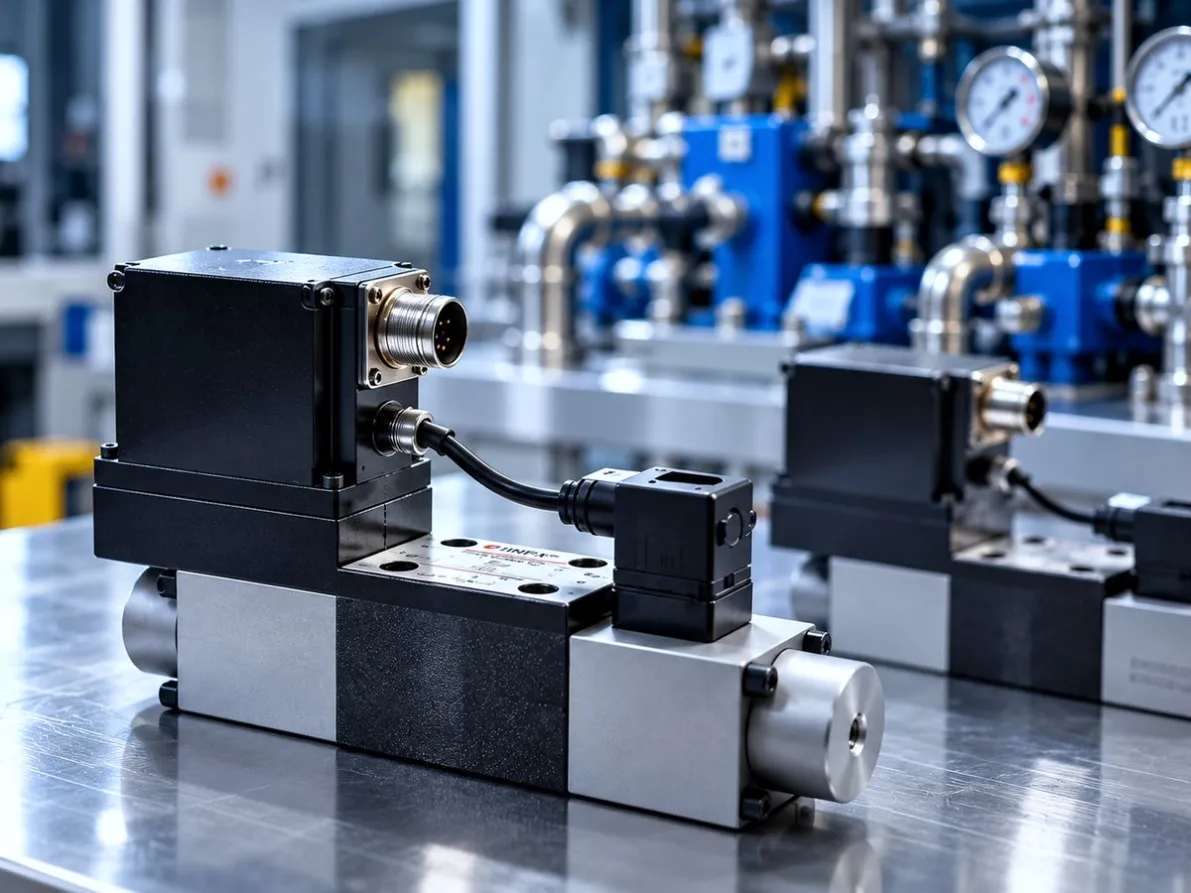
A proportional hydraulic valve controls the flow rate or pressure in a hydraulic system continuously, in proportion to an electrical input signal. Instead of simply switching oil between ports like a conventional directional valve, it regulates how much oil passes through and at what pressure. This makes it the standard choice whenever a machine needs variable speed, smooth acceleration, or controlled force - in presses, injection moulding machines, test benches and mobile equipment. This article explains how a proportional valve works, what to check before selecting one, and where these valves are typically applied.
Technical Explanation: How a Proportional Valve Works
A conventional directional valve is a switching element: the spool is either in one position or another. A proportional valve replaces this binary behaviour with a modulating one. The spool position is set by one or two proportional solenoids, and the metering notches between spool and sleeve open continuously, so the flow - and therefore the actuator speed - follows the input signal, commonly a 4-20 mA current or 0-10 V voltage command from the machine controller. In higher-quality valves this loop is closed internally: an LVDT (Linear Variable Differential Transformer) mounted on the spool reports its actual position to the integrated electronics, which correct the solenoid current until measured position matches the command. This is the principle of the JINFA VED03MX, a direct-operated proportional servo valve with integrated LVDT feedback and a zero-lap spool.
Two pressure figures matter when comparing valves, and they are often confused. The maximum working pressure is the continuous operating pressure the valve is designed for. The factory test pressure is the higher pressure each valve is subjected to before shipment to verify structural integrity. On JINFA valves these are stated separately: a maximum working pressure of 350 bar, with every valve factory pressure-tested up to 450 bar before shipment. When reading a datasheet, always confirm which of the two numbers is being quoted.
Key Selection Factors
Before choosing a proportional valve, pin down six points. First, the nominal size (NG), which sets the flow capacity - JINFA's current range covers NG6 to NG25. Second, the rated flow at the reference pressure drop: compare figures at the same delta p, otherwise the comparison is misleading. Third, the maximum working pressure of the valve body and the circuit. Fourth, the control signal, so the valve electronics match the machine controller. Fifth, the feedback type: open-loop solenoid control is simpler, while LVDT closed-loop control gives better repeatability. Sixth, the response behaviour: direct-operated valves respond quickly at moderate flows, while two-stage designs reach larger nominal sizes. Our product overview lists the confirmed range with the main technical data for each model.
Common Applications
Proportional valves are used wherever motion or force must be controlled rather than switched: industrial hydraulic power units with variable flow demand; presses and forming machines, where ram speed and pressing force follow a profile; injection moulding machines, for controlled clamp and injection movements; engineering and agricultural machinery, for fan drives, steering units and implement control; and test benches that need reproducible pressure and flow ramps. Requirements differ by market - a machine tool values repeatability and low hysteresis, while a mobile machine values robustness against contamination and vibration. KSHCNC manufactures valves and components for customers in fluid power, engineering machinery, automotive and marine applications; the company profile summarises the machining, forging, assembly and testing capabilities behind this.
Practical Tips
Quote pressures precisely - say 'max. working pressure 350 bar, factory-tested to 450 bar' rather than a single figure, so suppliers can match the right valve the first time. Keep the oil clean: proportional valves have fine metering notches, so follow the cleanliness class in the datasheet and check return-line filtration. Check the signal wiring, because a noisy command signal is a frequent cause of erratic behaviour that is wrongly attributed to the hydraulics. And record the nameplate: when replacing a valve, the model code on the nameplate encodes size, spool type and electronics - a photo is enough to start a replacement enquiry.
How JINFA Supports Customers
JINFA is the hydraulic valve brand of KSHCNC, a precision manufacturing company founded in 2005 in Kunshan, Jiangsu, China. The confirmed proportional and servo valve range covers NG6 to NG25, with maximum working pressure up to 350 bar and factory pressure testing up to 450 bar. Because KSHCNC also runs its own CNC machining, forging, assembly and testing operations, valve questions are answered by the people who manufacture the products. Need help selecting a proportional or servo valve? Send us your valve model, application details or nameplate photo, and our team will come back with an initial reply within 24 hours. More guides are available in our Technical Resources section.