Brass vs Aluminum for Wholesale CNC Machined Parts: Cost, Finish and How to Choose
Brass vs aluminum for wholesale CNC parts: which machines faster, costs less at volume, and suits fittings, housings and brackets. A buyer’s decision guide.
Direct answer
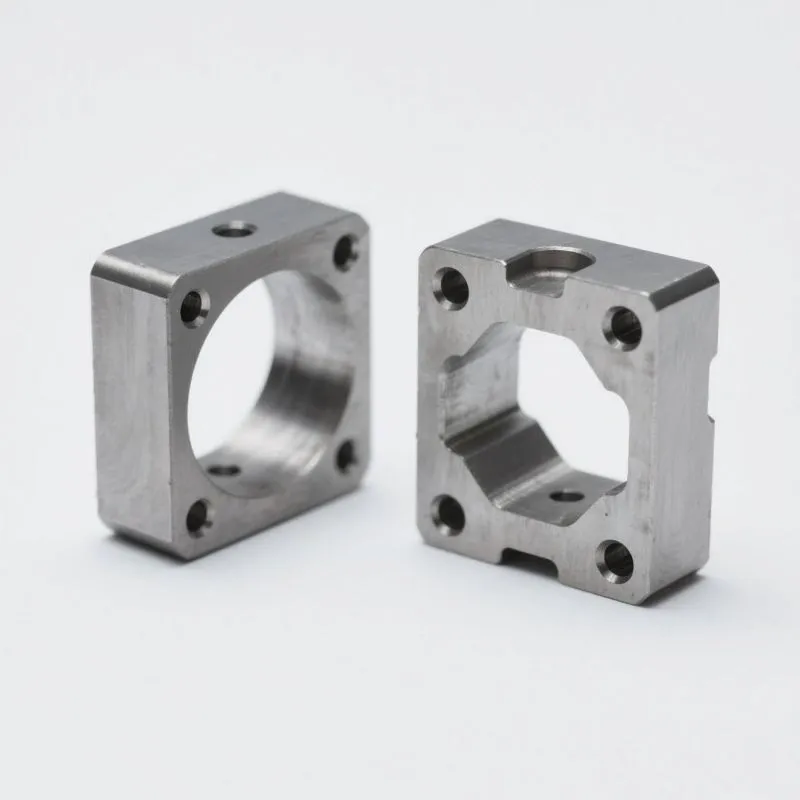
For most wholesale CNC orders, the choice is not about which metal is “better” — it is about what the part has to do. Choose brass for small, complex turned and milled parts where machinability, fine threads, sealing and a plated finish matter: fittings, bushings, valve components and connectors. Choose aluminum for larger, lighter parts where weight, corrosion resistance without plating, and anodized housings, brackets and covers matter. Brass usually machines faster per part but costs more per kilogram of material; aluminum usually costs less as a raw material and is lighter, but a large aluminum part can still cost more to machine if it needs extensive material removal, tight flatness or a decorative anodized finish. Send the drawing with the working conditions, the quantity and the finish, and the supplier can confirm which metal gives the lower practical cost for that part — not just the lower material price.
This guide is written for wholesale and OEM buyers ordering prototypes to volume production. For the general alloy background, see How to Choose the Right Material for Custom CNC Machined Parts, Brass, Copper or Bronze: Choosing the Right Copper Alloy for Machined Parts and 6061 vs 7075 Aluminum for CNC Machining.
The Short Answer for Wholesale Buyers
If the part is small, threaded, and made in the hundreds or thousands, start with brass. Free-machining brass cuts fast, breaks chips cleanly, holds fine threads and wears tooling slowly — which is why small, complex, high-volume turned and milled parts are so often brass.
If the part is a housing, bracket, cover, mounting plate or heat sink, start with aluminum. Aluminum alloys machine fast, keep the part light, resist corrosion without a coating, and take anodizing well. For many industrial components, 6061 is the practical starting point; 7075 is the choice only when the design needs substantially higher strength in a limited size or weight.
If the part touches drinking water or food, say so before the grade is frozen. Traditional free-machining brasses contain lead, and drinking-water and food-contact rules in many markets restrict it. Lead-free brass grades exist and machine well, but stock availability varies more than for standard grades — worth confirming before the drawing is final.
When Brass Is the Right Choice
Brass earns its place on four kinds of parts:
1. Fittings, connectors and valve components. Brass is the default copper alloy for machined parts because of machinability. Fittings, bushings, valve cores and inserts in brass hold threads well and seal reliably, and brass takes plating beautifully — nickel or chrome plated brass fittings look and wear better than the raw alloy would.
2. Small, complex turned parts at volume. The economics of brass is often the whole point of using it. Fast cutting, clean chip breaking and low tool wear keep cycle time down, which matters more as quantity rises. A part that is cheap to machine in brass can become expensive in a slower-cutting metal at the same volume.
3. Parts that need electrical or thermal conductivity, or smooth low-force cutting. Brass and copper serve where conductivity, sealing behaviour and smooth cutting matter — connectors, valve components and fittings. Copper itself is specified above all for conductivity, but it machines in a gummier way than brass; bronze is the sliding and seawater metal for bushings and marine fittings. Do not substitute one copper alloy for another by name alone.
4. Parts that will be plated. Brass under nickel or tin plating is a classic combination. Specify where the plating must not reach, and state the plating standard on the drawing, because the grade choice and the material certificate both depend on the application.
What brass is not: a lightweight structural metal, or a low-cost choice for a large, bulky part. Brass is dense, and a large brass part carries both material weight and material cost that aluminum would avoid. If the part is large and strength-to-weight matters, aluminum is usually the better starting point.
When Aluminum Is the Right Choice
Aluminum earns its place where weight, size and corrosion resistance decide the part:
1. Housings, brackets, covers and mounting plates. Aluminum is the default where weight matters and corrosion resistance is needed without coatings. Typical KSHCNC aluminum parts include housings, brackets, covers, mounting plates, spacers, fittings and heat sinks, in 6061-T6/T651, 7075-T6/T651 and 6063 extruded profiles.
2. Parts that need anodizing. Both 6061 and 7075 can be anodized, but 6061 is often preferred where a consistent decorative finish is required. 7075 may produce a darker or less uniform appearance under certain anodizing conditions, particularly with clear or light-coloured finishes. For appearance-critical components, confirm the finishing specification and approve a representative sample before production.
3. Parts that need welding. 6061 is generally more suitable for conventional fusion welding than 7075, although welding can reduce strength in the heat-affected zone. 7075 is generally not recommended for conventional fusion welding because of its susceptibility to cracking. If the component will be welded after machining, review the material choice before finalizing the drawing.
4. Larger parts where material cost and weight dominate. Aluminum is lighter than brass and, as a raw material, generally lower in cost for the same volume of part. That advantage can disappear if the part needs deep pockets, thin walls or demanding flatness — removing a large amount of material can redistribute residual stress and cause distortion — so temper matters too. T651 includes an additional stress-relief operation by stretching, which can help reduce residual stress in suitable wrought product forms, and it matters for large flat plates, thin-wall housings and deep pockets.
For load-critical components, typical reference values are not guaranteed minimums: 6061-T6 is typically quoted around 276 MPa yield and 310 MPa tensile strength, and 7075-T6 around 503 MPa yield and 572 MPa tensile strength, at similar density. Confirm the applicable material standard, product form, thickness range and material certificate for the exact order. Higher strength does not mean substantially higher stiffness — the elastic moduli of 6061 and 7075 are relatively similar — so switching to 7075 alone may not solve a deflection problem.
What Actually Drives the Unit Price at Volume
Raw material price is only one factor in a wholesale CNC quote. Four other factors often move the price more:
Machinability and cycle time. An aluminum part and a brass part of identical geometry can differ substantially in cycle time, and a stainless part differs again. Brass and aluminum both machine well, but cutting parameters, tool selection, part geometry and production quantity influence machining time. A material switch is sometimes worth evaluating even late in a project, because cycle time is charged on every part.
Material availability and stock size. Common bar and plate stock in standard sizes is cheaper and faster to source than special sections or rarely rolled grades. On a custom machined part, stock size often dictates how much material becomes chips. 6061 is commonly available in a broad range of bar and plate sizes; depending on the market and required dimensions, 7075 may involve additional sourcing cost or lead time. The same applies to lead-free brass: confirm stock before the drawing freezes the specification.
Material utilization. A component machined from an oversized block may generate substantial material waste. This becomes more expensive when using a higher-cost alloy, and it is one reason to check whether a casting or forging blank, finished by CNC machining, would use material better than machining from solid bar — a question to raise with the supplier, not to decide from the drawing alone.
Tolerances and finish. Thin walls, deep cavities, tight tolerances and demanding flatness specifications may require additional machining operations or inspection. Decorative anodizing, hard anodizing and additional finishing requirements can also affect the final quotation. For purchasing teams, the most useful question is not simply “which alloy is cheaper?” but “which alloy meets the drawing requirements at the lowest practical manufacturing cost?”
Do not over-specify: 7075 where 6061 would do, or a tight tolerance across a whole part where only a few functional surfaces need it, buys performance the part never uses. State which properties are negotiable — for example, “6061 or equivalent acceptable” or “304 or equivalent acceptable” in the equivalent steel case — because it widens the sourcing window and often the price.
Surface Finish: Plating vs Anodizing
Finish is part of the material decision, not an afterthought:
- Brass: polishing, brushing, nickel or tin plating, protective coatings and laser marking. Plating gives wear resistance and appearance, and it is one reason brass is chosen for visible fittings and connectors.
- Aluminum: clear or coloured anodizing, hard anodizing, bead blasting, brushing, polishing and powder coating. Anodizing gives corrosion resistance and a durable coloured surface without a separate coating layer, and hard anodizing is the choice where wear resistance matters.
State the finish and the standard on the drawing, and say which surfaces are cosmetic. A cosmetic surface that must look good as-finished is part of the tolerance and finish conversation, and a sample approval before volume production avoids a batch that meets the dimensions but fails the appearance check.
A Side-by-Side Comparison for Buyers
Decision point | Brass | Aluminum |
|---|---|---|
Best for | Small fittings, bushings, valve components, connectors, threaded parts | Housings, brackets, covers, plates, spacers, heat sinks |
Machinability | Very good — free-machining grades cut fast, hold fine threads | Good to very good — 6061 and 7075 both machine well |
Weight | Heavy / dense | Light — about one-third the density of steel, much lighter than brass for the same volume |
Corrosion | Good, with plating for appearance and protection | Good without coating; anodizing adds protection |
Typical finish | Polishing, brushing, nickel / tin plating, laser marking | Clear / coloured anodizing, hard anodizing, bead blasting, powder coating |
Strength | Moderate; chosen for machinability, not strength | 6061 practical strength; 7075 substantially higher where needed |
Welding | Not the usual reason to choose brass | 6061 generally weldable; 7075 generally not recommended for fusion welding |
Watch out for | Lead content in drinking-water / food-contact parts; material cost on large parts | Anodizing colour variation on 7075; distortion on large, heavily machined plates |
KSHCNC grades | Free-machining brass, lead-free brass, bronze and selected copper alloys | 6061-T6/T651, 7075-T6/T651, 6063 extruded profiles |
How to Specify Brass or Aluminum on a Drawing
Specify the grade, not the family. “Aluminum” alone invites substitution between 6061 and 7075; “brass” alone invites substitution between a free-machining grade and a lead-free grade. State the exact alloy, temper and product form — for example, 6061-T651 plate, or free-machining brass bar — and the standard on the drawing (GB, ASTM or EN), because the material certificate must match it.
Include in the enquiry, with the drawing:
- 2D/3D drawings (PDF, STEP or STP)
- Alloy grade and temper, or the application if the grade is not yet fixed
- Prototype or production quantity, and the expected annual volume if this is a repeat order
- Critical tolerances and thread specifications
- Surface finish and inspection requirements, including which surfaces are cosmetic
- Working conditions: load, environment, temperature, and whether the part touches water or food
If the part will be heat treated or coated afterwards, say so on the drawing, because the pre-treatment stock size and final dimensions both depend on it.
Wholesale Buying Checklist
- Part type: small threaded fitting or connector → start with brass; housing, bracket or cover → start with aluminum.
- Working conditions: load, environment, conductivity, sealing, and water / food contact stated on the enquiry.
- Grade and temper specified, not just “brass” or “aluminum”; standard (GB / ASTM / EN) stated.
- Quantity and annual volume stated — they can change the recommended process and the stock choice.
- Finish specified by surface: plated brass or anodized aluminum, and which surfaces are cosmetic.
- Tolerances applied only where they are functional; the rest left to the supplier’s standard machining practice.
- Sample approved before volume production where appearance, anodizing colour or plating matters.
Frequently Asked Questions
Is brass or aluminum cheaper for CNC machined parts?
It depends on the part. Brass often machines faster per part, which helps at volume for small parts, but brass material costs more per kilogram and is heavier. Aluminum material is generally lower in cost for the same volume, but a large aluminum part with deep pockets or tight flatness can still cost more to machine. Compare the full manufacturing cost for the actual geometry and quantity, not the material price alone.
Can I switch a part from brass to aluminum to save cost?
Sometimes, but check the function first. Aluminum will not seal, thread or conduct in the same way as brass, and it will not take the same plated finish. If the part is a fitting or valve component where brass was chosen for machinability and sealing, a switch needs an engineering review. If the part is a bracket or cover where weight and anodizing matter, aluminum is often the better choice from the start.
Which aluminum grade should I specify — 6061 or 7075?
For most general industrial CNC parts, 6061 is a sensible starting point. Consider 7075 when the design requires higher yield strength, particularly where weight or available space limits the component dimensions. Before finalizing, ask: what loads will the part see, is yield strength or stiffness the concern, does it need welding, is cosmetic anodizing important, and is the extra material cost justified?
Does lead-free brass machine as well as standard brass?
Lead-free brass grades exist and machine well, but stock availability varies more than for standard grades. If the part touches potable water or food, state it in the enquiry so the grade, the material certificate and the stock check are all done before the drawing is frozen.
Should I order a sample first?
For a new part, a new finish, or a change of material, a sample is the cheapest way to confirm dimensions, finish and function before volume production. Samples, lead times and pricing are evaluated according to the project — send the drawing and the quantity and KSHCNC will confirm them for that order.
Get a wholesale quotation
Send KSHCNC the drawing, the grade and temper (or the application, if the grade is not yet fixed), the quantity, the critical tolerances and the surface finish. KSHCNC will review machinability, stock availability and finishing, and reply with a quotation for the actual geometry.
- Brass parts: Wholesale Custom CNC Brass Machined Parts
- Aluminum parts: Wholesale Custom CNC Machined Aluminum Parts
- Contact: Contact KSHCNC
KSHCNC is a precision manufacturing company founded in Kunshan, China, in February 2005. It manufactures custom CNC machined parts in brass, aluminum, stainless steel, carbon and alloy steels, free-cutting steel and copper, on 68 CNC machines including 30 CNC lathes and Mazak, Okuma and HAAS machining centers, with machining tolerances to 0.01–0.02 mm depending on part geometry, under ISO 9001 and IATF 16949 quality management systems. Learn more on the About KSHCNC page.