Hydraulic Proportional Valves for Agricultural Machinery: Durability, Contamination Tolerance and Cost
How to choose a hydraulic proportional valve for agricultural machinery: durability, contamination tolerance and total cost. JINFA VED valves, NG6–NG25.

The Direct Answer: What Works Best on a Farm Machine
For most tractors, harvesters and agricultural implements, a proportional valve is usually the better choice than a servo valve. It gives smooth, continuous control of flow and pressure, it tolerates the dirtier oil and vibration found in field work better than a servo valve, and it costs less to buy and to maintain. The exception is a closed-loop axis that needs very fast response and very tight repeatability. In that case, a proportional servo valve — a proportional valve with spool-position feedback — can close the gap. That is the design used in the JINFA VED series, which covers NG6 to NG25.
Why Field Conditions Punish Servo-Grade Valves
A farm machine does not work in a clean factory. It works in dust, mud, rain, heat and cold, often far from a workshop. The hydraulic system is opened for service in the field, hoses are changed outdoors, and the machine sits idle for months and then works hard for a few weeks at harvest.
A classic servo valve is a precise instrument. It typically uses a two-stage design with a fine pilot stage — a flapper-nozzle or jet pipe — and very small clearances. That design gives extremely fast response and low hysteresis, but it is sensitive to contamination. A small amount of dirt, water or varnish in the oil can stick a pilot stage, increase leakage, or cause the spool to hesitate. On a tractor, that does not just mean poor performance. It can mean a loader that drifts, a steering function that feels inconsistent, or a machine that stops in the middle of a working day.
Vibration is a second problem. Farm machines shake constantly. Connections loosen, electrical connectors are exposed to moisture, and a valve that depends on very fine mechanical feedback is more likely to drift out of adjustment than a more robust design. Temperature swings add a third problem. Cold oil is thick and slow to respond in the morning; hot oil is thin and leaks more by the afternoon. A valve for agricultural use has to work across that whole range without constant re-adjustment.
This does not mean servo technology has no place in agriculture. It means the valve should be chosen for the actual duty, not for the best datasheet figure. Many farm functions — lifting an implement, steering, controlling a hydraulic motor, adjusting a header — need smooth, proportional control and good repeatability, but they do not need aerospace-grade dynamics. For those functions, robustness matters more than the last few milliseconds of step response.
Farm machines need hydraulic valves that keep working in dust, vibration and temperature swings — not only in clean factory conditions.
Contamination Tolerance and Filtration: What ISO 4406 Means in Practice
Oil cleanliness is usually described with ISO 4406, a code that counts particles of different sizes in a sample of oil. A lower code means cleaner oil. The exact code a system needs depends on the components in it, the duty and the manufacturer’s guidance, and it should always be checked against the valve datasheet for the specific model.
As a general rule, servo valves demand cleaner oil than proportional valves. A servo valve may call for oil around ISO 4406 classes 14/11 or better, which requires good filtration and careful handling during service. A direct-operated or two-stage proportional valve is generally built with larger clearances and a more robust spool arrangement, so it tolerates typical industrial cleanliness classes better. That difference matters on a farm, where filtration is often a return-line filter and a suction strainer, and where oil is topped up in the field.
Contamination tolerance does not mean contamination does not matter. It means the margin for error is wider. Even a robust proportional valve will wear faster, leak more and respond less consistently if the oil is badly contaminated. The practical approach for agricultural machinery is:
- Fit and maintain the filtration the valve manufacturer recommends, and change filters on schedule, not only when a fault appears.
- Keep oil containers closed, use clean funnels, and avoid opening the reservoir in dusty conditions.
- Check the oil condition when a valve starts to behave inconsistently — slow response, drift, or a change in hysteresis are often oil problems before they are valve problems.
- After a hose failure or a component change, flush the affected circuit before putting the machine back into full service. A single repair can introduce more contamination than a season of normal use.
For a manufacturer or repair provider, this is also a service point. If a customer reports a valve fault, ask about the oil and the filter history before ordering a replacement. A new valve fitted into dirty oil will fail in the same way as the old one.
Proportional vs Servo: The Trade-Offs That Matter on Farm Machines
The distinction between a proportional valve and a servo valve is described in more detail in Servo Valve vs Proportional Valve: Key Differences Explained. The summary for agricultural use is:
Proportional valves grew out of directional valve technology. A proportional solenoid moves the spool directly, or through a pilot stage in a two-stage design. The construction is robust, the clearances are more generous, and the valve tolerates normal industrial oil and field service better. Response is fast enough for most farm functions, and the cost is lower. The trade-off is that an open-loop proportional valve, without spool-position feedback, has higher hysteresis and less precise repeatability than a closed-loop design.
Servo valves offer very fast response, low hysteresis and very tight control. The trade-off is cost, sensitivity to contamination, and a need for clean oil and careful handling. They are the right choice for high-dynamic closed-loop axes — for example, a test machine or a high-speed positioning axis — but they are often over-specified for a tractor lift, a steering circuit or a harvester header.
Proportional servo valves sit between the two. Many modern valves sold as proportional valves now include spool-position feedback, usually an LVDT on the spool, and closed-loop electronics. That was once a servo-valve feature. The JINFA VED series, for example, are proportional servo valves: direct- or two-stage designs with integrated LVDT closed-loop control and a zero-lap spool. When comparing datasheets, look at the actual performance figures — hysteresis, step response and repeatability — rather than the family name alone. For a farm machine, that combination can be the practical answer: proportional-valve robustness with servo-grade repeatability where it is needed.
If you are still deciding which family fits a specific function, start with What Is a Proportional Hydraulic Valve? for the basic operating principle, then compare the duty of the axis: how clean is the oil, how fast must it respond, how repeatable must it be, and what does it cost to own and maintain?
Sizing the Valve: NG6, NG10, NG16 and NG25
Valve size is usually given as a nominal size, or NG size, which describes the mounting interface and, broadly, the flow capacity. JINFA VED valves are available from NG6 to NG25. The right size depends on the flow the function needs, the pressure drop the system can accept, and the mounting pattern already on the machine or manifold.
A common mistake is to size only by maximum flow. A valve that is too large for the function will be hard to control at low flow; a valve that is too small will cause a large pressure drop, heat the oil and limit speed. The selection should be based on the rated flow at the actual differential pressure for that circuit, not only on the nominal size.
As a concrete example, the JINFA VED03MX Proportional Servo Valve NG6 is a direct-operated servo proportional valve with a spool-sleeve structure, integrated amplifier and LVDT position sensor, zero-lap spool and fail-safe position. It is rated for a maximum working pressure of 350 bar, a rated flow of 2–40 L/min at 70 bar differential, and hysteresis of less than 0.1%. It is suitable for closed-loop position, velocity and pressure control where those figures are needed. That example shows the level of detail a datasheet should give. Do not select a larger size on the basis of the NG6 figures alone — check the rated flow, pressure and hysteresis for the specific NG10, NG16 or NG25 model being considered.
For a replacement, the mounting pattern is often the deciding factor. Many agricultural machines use a standard NG interface, which is why a replacement that fits the existing manifold without modification is valuable. Photograph the nameplate before ordering: the model code usually encodes the spool type, size and electronics, and it prevents ordering a visually similar valve with different control behaviour. Compatibility must be confirmed before replacement, even when the mounting pattern matches.
Maintenance and Serviceability in the Field
A valve for agricultural machinery should be easy to diagnose, easy to replace and easy to keep clean. In practice, that means:
- Accessible connectors and a clear nameplate. The model, serial number and electrical connection should be readable without removing other components. Keep a photograph of the nameplate with the machine records.
- Replaceable filters and seals. Check which seals and filters are service items, and whether they are available as a kit. A valve that can only be serviced at the factory is a poor choice for a machine that works far from a dealer.
- Simple electrical interface. Integrated electronics reduce external wiring, but the connector type, supply voltage and command signal must match the machine’s controller. Confirm the command signal — voltage or current — and the fail-safe position before ordering.
- A spare-parts plan. For a fleet, it is often cheaper to hold one spare valve of the most common size than to hold a full set of seals and solenoids. For a single machine, hold the filter and seal kit, and know the lead time for a replacement valve before the season starts.
- A test after fitting. After a replacement, check for external leakage, check the function at low speed first, and confirm that the spool returns to its fail-safe position when power is removed. Do not put the machine straight into full-load work without that check.
For manufacturers, serviceability should be part of the design review, not an afterthought. A valve that is easy to reach, easy to identify and easy to replace will cost less over the life of the machine, even if its purchase price is slightly higher.
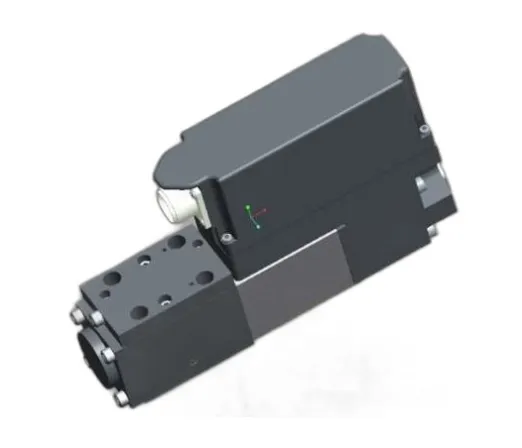
Dust, vibration and dirty oil are normal in the field — valve selection should start from those conditions.
Total Cost of Ownership, Not Just the Purchase Price
A servo valve can look expensive only at the point of purchase. A cheap valve can look expensive after two seasons. The total cost of ownership for a farm machine includes:
| Cost item | What to count |
|---|---|
| Purchase price | Valve, amplifier/electronics if separate, connectors and mounting parts |
| Downtime | Lost working hours during a failure, especially at planting or harvest |
| Oil and filtration | Filter changes, oil analysis, flushing after a failure |
| Maintenance | Seal and filter kits, labour for diagnosis and replacement |
| Repeatability and waste | Poor control that causes uneven work, rework or crop damage |
| Spares and lead time | Cost of holding a spare, and the cost of waiting for a replacement |
A proportional valve often wins on total cost for farm machines because it is cheaper to buy, more tolerant of field oil, and simpler to maintain. A proportional servo valve can win where repeatability directly affects the quality of the work — for example, where a header or a positioning function must return to the same position every time. The right comparison is not valve against valve on price alone. It is the cost of the valve, plus the cost of the oil it needs, plus the cost of the downtime it avoids.
Practical Checklist Before You Order
Use this checklist for a new machine design or a replacement. If any item is unknown, confirm it before ordering.
- ☐ Machine type and function: tractor, harvester, sprayer, loader, or implement — and which function the valve controls
- ☐ Nominal size and mounting pattern: NG6, NG10, NG16 or NG25, and whether it must fit the existing manifold without modification
- ☐ Rated flow at the actual differential pressure for that circuit
- ☐ Maximum working pressure, and whether 350 bar is sufficient for the circuit
- ☐ Command signal and supply voltage, and the fail-safe position required
- ☐ Spool type and overlap: zero-lap for closed-loop control, or positive overlap where holding position matters
- ☐ Feedback type: open-loop solenoid control, or LVDT position feedback
- ☐ Oil cleanliness the valve requires, and the filtration fitted on the machine
- ☐ Hysteresis, step response and repeatability figures at the actual pressure and flow, not only catalogue values
- ☐ Nameplate photograph and existing valve model code, for a replacement
- ☐ Spare-parts and lead-time plan for the season
Frequently Asked Questions
Can a proportional valve replace a servo valve on a tractor?
Often, yes — if the function does not need servo-grade dynamics. Many tractor functions need smooth proportional control and good repeatability, not the fastest possible response. A proportional servo valve with LVDT feedback can be a practical middle ground. Check the flow, pressure, hysteresis and repeatability for the specific axis before deciding, and confirm compatibility before replacement.
Why do farm hydraulic valves fail in the field?
Contamination is the most common cause, followed by heat, water in the oil, and wear from vibration and long service intervals. A valve that sticks, drifts or responds slowly is often reacting to dirty oil or a blocked filter. Check the oil and filtration first, and flush the circuit after a hose failure or component change.
What size valve does a tractor need — NG6, NG10, NG16 or NG25?
It depends on the flow and the mounting pattern for that function, not on the size of the tractor alone. Select by rated flow at the actual differential pressure, confirm the mounting interface, and check the specific model’s datasheet. Do not select a larger size only on the basis of NG6 figures.
Are proportional valves cheaper to maintain than servo valves?
Generally, yes. Proportional valves are usually cheaper to buy, more tolerant of typical field oil, and simpler to service. Servo valves can cost more to buy and to keep clean. The total cost depends on the duty, the oil maintenance, and how much downtime a failure causes.
How JINFA Supports Agricultural Machinery Customers
JINFA, the hydraulic valve brand of KSHCNC in Kunshan, China, manufactures proportional servo valves from NG6 to NG25 that combine proportional-valve robustness with servo-grade features such as LVDT closed-loop control. KSHCNC was founded in February 2005, manufactures its own valves with in-house machining, forging, assembly and testing, and operates under ISO 9001 and IATF 16949 quality management systems. Because the valves are manufactured in-house, trade-offs such as spool overlap, filtration class and response requirements can be discussed concretely, rather than in general terms.
Not sure whether a proportional valve or a proportional servo valve fits your machine? Send us your machine type, application, and the existing valve model or nameplate photograph, and we will reply with an initial recommendation. Compatibility must be confirmed before replacement.
Send your application details to KSHCNC: https://www.kshcnc.com/contact-us