7 Electro-Hydraulic Actuator Spec Mistakes That Cost OEM Buyers
Electro-hydraulic actuator spec mistakes cost OEM buyers redesign, downtime and rework. Seven checks to get the specification right before finalizing your OEM order.
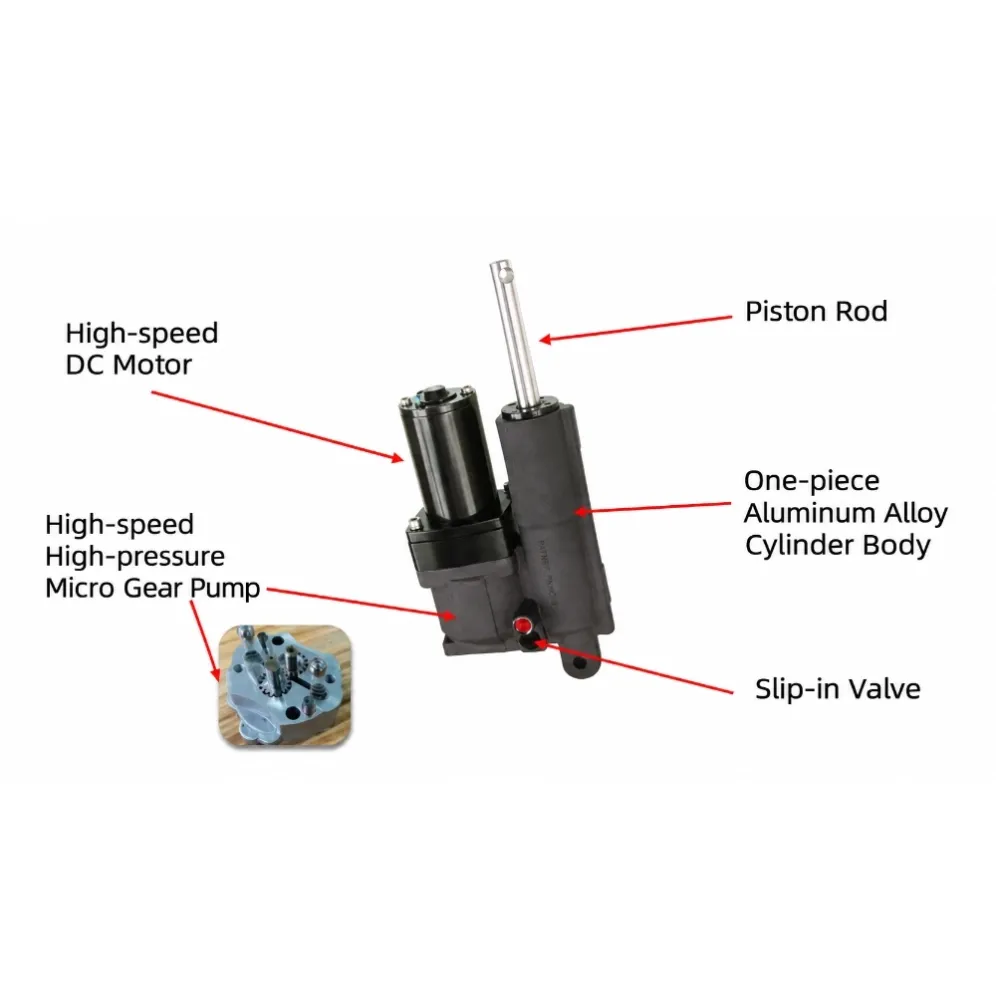
The Cost of a Specification Mistake
An electro-hydraulic actuator arrives as a single unit — a hydraulic cylinder or motor, a control valve and the electronics that command them — ready to connect to power, oil and a control signal. That integration is the reason machine builders choose it, and it is also the reason a specification mistake costs so much. When a separate valve and cylinder are wrong, one component can be changed. When an integrated actuator is wrong, the whole unit comes out, the machine design changes with it, and the schedule slips while the replacement is made.
The mistakes that cause this damage are rarely exotic. They are ordinary omissions: a duty cycle described by peak force alone, a mounting copied from an old unit without checking the ports, an environment described as factory conditions when the machine works outdoors, a control signal assumed rather than confirmed. Each one is cheap to fix on paper and expensive to fix on a machine. This guide covers the seven spec mistakes that cost OEM buyers the most, and how to prevent each one.
Mistake 1: Specifying by Peak Force Alone
The first mistake is specifying an actuator by peak force alone. Peak force answers one question — how hard the unit can push at its limit — and says nothing about how often the unit moves, how long it holds load at rest, or whether it works continuously or in short bursts. An actuator sized for occasional use will not survive continuous duty: heat builds, seals wear, and life shortens. An actuator sized for continuous duty in an intermittent application costs more than the job needs.
Describe the real duty cycle to the supplier: cycles per hour, hold times, and whether the load is steady or changing through the stroke. Load direction matters too: a load pushing sideways on the rod, even slightly, accelerates seal and bearing wear, and side load is the detail most often missing from a specification. Shock loads deserve the same attention: a press meeting sudden resistance, or a mobile machine hitting a stop, sends a force spike through the actuator that a steady load figure never shows. Describe the duty cycle as the machine actually runs it.
Mistake 2: Copying the Old Mounting Without Checking the Interface
The second mistake is copying the mounting of the unit being replaced and assuming the new one will fit. Mounting style, mounting point dimensions, stroke, rod end and output connection decide whether the unit fits the machine at all. A unit with the right performance and the wrong mounting is not usable, and discovering that on the assembly line means rework or a new machine layout.
Ports and connectors deserve the same check: port sizes and positions, electrical connectors, and hose and cable routing should be confirmed against the machine layout, not assumed from a similar unit. An actuator that forces a hose into a tight bend or a cable across a hot surface creates a maintenance problem that persists long after commissioning. Where the actuator replaces an existing unit, a direct fit matching the mounting and ports saves significant redesign, and the same logic applies to the valve: a replacement proportional or servo valve that fits the existing manifold avoids the same rework. Measure the interface on the machine, not on the old catalogue page.
Mistake 3: Describing the Environment in Vague Terms
Describing the environment in vague terms is the third mistake. "Factory conditions" tells a supplier nothing. Temperature, dust, moisture, washdown, vibration and exposure to chemicals or weather affect seals, coatings and electronics, and each one points to a different design choice. An actuator that works well in a clean assembly hall can fail quickly on a mobile machine or in a washdown area, looking like a product fault when it is really a specification gap.
Injection moulding machines, presses and mobile machinery put actuators in very different surroundings. A press beside a furnace and a press in a clean room do not share an environment. Describe the surroundings in concrete terms: temperature extremes, washdown, dust or cutting fluid reaching the unit, and vibration passed into the mounting. The supplier can only protect the unit against conditions it has been told about.
Mistake 4: Leaving Control Behaviour Undefined
Control behaviour is the fourth area buyers leave undefined. Confirm what command signal the actuator accepts, what feedback it provides, and how it responds to a loss of signal or power. A unit that moves to a safe position on signal loss behaves very differently from one that holds position, and the difference matters for machine safety.
Feedback deserves the same precision: confirm position, pressure or force feedback where fitted, including type and accuracy class, and whether the machine controller can use it. Feedback the control system cannot read adds cost without adding value. If the machine needs closed-loop control and the actuator offers none, repeatability will suffer because of a requirement that was never discussed. Agree the signal, feedback and failure behaviour in writing before ordering, and test them at commissioning rather than discovering them in service.
Mistake 5: Forgetting the Valve Inside
Inside most electro-hydraulic actuators sits a proportional or servo valve — and forgetting it is the fifth mistake. Its characteristics shape the response of the whole unit. A valve too small for the flow the application needs makes the actuator slow and unresponsive, and a valve chosen without regard to control behaviour makes a precise machine feel coarse. Valve size and type should suit the flow and control the application needs — a choice to make with the supplier, not a catalogue default.
KSHCNC supplies JINFA proportional and servo valves from NG6 to NG25, including the VED03MX proportional servo valve in NG6 and the VED07MX two-stage proportional servo valve in NG16. The choice between sizes depends on the application rather than on the actuator alone. Ask which valve sits inside the actuator on offer, and what that choice means for speed, repeatability and oil cleanliness requirements. The valve size guide explains how the sizes relate. A valve is not a detail to leave until later: it decides how the actuator behaves.
Mistake 6: Ordering Before Checking the Oil Supply
Sixth: ordering before checking the oil supply. An actuator is only as good as the oil that feeds it: the power unit should deliver oil at the cleanliness the actuator valve can tolerate, verified rather than assumed. New oil is not necessarily clean enough for a proportional or servo valve, and a system opened for installation or repair should be flushed with the actuator protected before the unit enters service. A new actuator fitted to a dirty system inherits the old system problems, and the faults that follow — slow response, drift, premature wear — get blamed on the actuator.
Filtration, breathers and reservoir care belong in the specification, not in an afterthought: confirm the recommended filtration, how filter condition is monitored, and what oil-cleanliness routine the machine builder should follow. If the machine already has a hydraulic power unit, check the actuator requirements against it before ordering. A mismatch here is far easier to prevent than to diagnose after the machine is built.
Mistake 7: Ordering Without a Test Plan or Service Access
The final mistake is ordering without a test plan or service access. Before specifying, check access on the machine: can seals be reached, can the valve be removed without dismantling the machine, and are filters and breathers reachable? A unit buried inside a machine frame is expensive to maintain whatever its purchase price. Documentation should be part of the purchase too: installation instructions, schematic, wiring, spares list and maintenance intervals. Without these, the first service becomes a reverse-engineering exercise.
Testing should be agreed before delivery, not after a problem appears: a factory test confirming the actuator moves, holds and responds as specified is worth far more than a promise. Confirm what is tested, the acceptance criteria, and the test documentation supplied. An agreed test protects both sides: the buyer knows what was proven, and the supplier knows what was expected.
Getting the Specification Right
None of these mistakes comes from bad intent — only from a specification written from one number, one old drawing, or one assumption never checked. A short conversation with the supplier about duty, environment, control, the valve inside, oil supply, testing and service access prevents most of them — before the specification is frozen. The cost of that conversation is an afternoon; the cost of skipping it is a machine that does not behave as designed. Our electro-hydraulic actuator assemblies and electrohydraulic linear actuator pages show the range. See also our guide on what OEM buyers should specify before requesting a quote.
The seven mistakes expand into nine checks below: duty cycle and load are checked separately, and so are maintenance access and testing.
Comparison Table
Check | What to confirm | Why it matters |
|---|---|---|
Mounting and interface | Mounting style, dimensions, stroke, rod end, port and connector positions | Decides whether the unit fits the machine at all |
Duty cycle | How often it moves, how long it holds load, continuous or intermittent use | Determines heat, wear and service life |
Load | Force or torque, direction, variation during stroke, shock or side load | Side load and shock accelerate wear |
Environment | Temperature, dust, moisture, washdown, vibration, chemicals | Affects seals, coatings and electronics |
Control and feedback | Command signal, feedback type, behaviour on signal or power loss | Decides repeatability and machine safety |
Valve inside | Valve size and type matched to the application's flow and control needs | Shapes the actuator's response |
Oil supply | Oil cleanliness, filtration, flow and pressure stability | A dirty supply causes drift and premature wear |
Maintenance access | Reachable seals, removable valve, accessible filters | Determines lifetime service cost |
Documentation and testing | Installation, schematic, wiring, spares, factory test and acceptance criteria | Prevents disputes and speeds up first service |
Buyer Checklist: Before Specifying an Electro-Hydraulic Actuator
- Confirm mounting, stroke, rod end, port and connector positions against the machine design.
- Describe the real duty cycle, not just the peak load.
- Describe the load, including direction, variation, shock and side load.
- Describe the environment in concrete terms: temperature, dust, moisture, washdown, vibration.
- Confirm the command signal, the feedback provided, and the behaviour on signal or power loss.
- Confirm the valve size and type suit the application's flow and control needs.
- Check the oil supply: cleanliness, filtration, flow and pressure stability.
- Check maintenance access: seals, valve removal, filters.
- Require documentation — installation, schematic, wiring, spares — and an agreed factory test with acceptance criteria.
FAQs
Is an electro-hydraulic actuator better than a separate valve and cylinder?
It depends on the machine. An integrated actuator can shorten assembly, reduce plumbing and wiring, and give a single point of responsibility. A separate valve and cylinder can be easier to service or replace individually. The decision should be based on the machine's layout, service access, and who carries responsibility for motion performance.
What information does a supplier need to quote an actuator?
Mounting and interface dimensions, stroke, load and duty cycle, environment, command signal and feedback requirements, and the machine's oil supply conditions. A quotation based on peak force alone is not a complete quotation.
Can an actuator be replaced without redesigning the machine?
Only if the replacement matches the existing mounting, stroke, ports, and connectors. If any of those differ, the machine design must change. Confirm the interface before ordering, not after delivery.
How is an actuator tested before delivery?
That should be agreed in advance. A factory test normally confirms movement, holding, and response against the specification. The buyer should confirm what is tested, what the acceptance criteria are, and what test documentation is supplied with the unit.
What causes most actuator failures in service?
The common causes are the same as for hydraulic systems generally: contamination, overheating from an under-specified duty cycle, side load, and environment exposure the unit was not specified for. Most of these trace back to the specification, not to the unit itself.
Call to Action
If an actuator specification is on your desk now, send the drawing and the duty cycle details to KSHCNC for a quotation. Tell us the mounting and interface dimensions, the load and the environment, and we will check the actuator and the valve inside against your application. If the specification is still open, we can review it with you before it is frozen, so the mistakes in this guide stay on paper. If you are pairing a cylinder with a JINFA proportional or servo valve instead, tell us your flow requirements and we will match the valve size. Contact KSHCNC to start the conversation.