Proportional Hydraulic Valve Troubleshooting: Drift, Slow Response & Overheating
Diagnose proportional hydraulic valve drift, slow response, overheating & leakage before replacing parts. Step-by-step checks + OEM drop-in replacement guide.
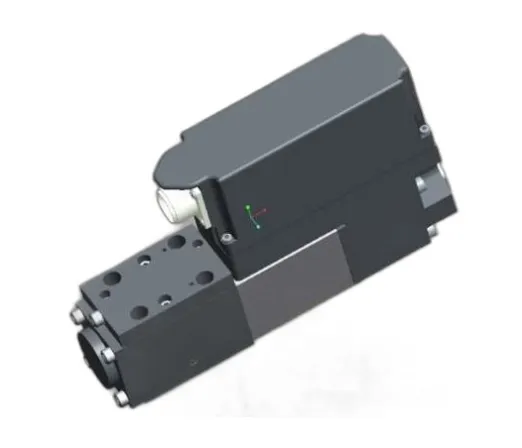
Introduction: Read the Symptom Before You Replace the Valve
When a proportional hydraulic valve stops behaving, the instinct is to replace it. That instinct is often expensive and sometimes wrong. Many valve problems are not valve problems at all: the oil is dirty, air is trapped in the lines, a connector is loose, or the valve was fitted to a system that was never flushed. Replacing the valve without finding the cause puts a new valve into the same conditions that damaged the old one, and the same symptom comes back.
Troubleshooting means reading the symptom carefully and checking the cheapest, most likely causes first. Each symptom points at a different shortlist of causes, and this guide works through them in order: what each one usually means, what to check first, and when replacement is genuinely the right answer.
It is written for repair shops and OEM maintenance teams who service machines fitted with proportional or servo valves. It states no performance figures; those depend on the application and must come from the supplier's documentation for the specific valve. For installation and commissioning, see: https://www.kshcnc.com/posts/installing-proportional-hydraulic-valve-commissioning-checklist
Before You Start: Safety and a Record
Stop the machine and make it safe before touching the valve: release stored pressure, lock out the power, and let hot oil and hot surfaces cool. A valve under pressure can move an actuator without warning, and hydraulic oil under pressure can penetrate skin. No diagnosis is worth an injury.
Then record what you know before you change anything: the valve model and serial number, the machine and its application, when the symptom started, whether it appeared suddenly or gradually, and what changed just before it appeared — a recent oil change, a repair elsewhere in the system, a period of standing idle. That history often points at the cause faster than any test. Note the oil's appearance and temperature, and when it was last changed and filtered.
Finally, check the obvious before reaching for instruments: is the valve the right model for the manifold, are the hydraulic lines connected as the schematic says, and is the electrical connector seated and dry? A surprising number of faults are found in that first minute. For the replacement side of the same question — matching a new valve to an existing manifold — see: https://www.kshcnc.com/posts/hydraulic-valve-replacement-guide-repair-shops
Symptom Table: First Checks at a Glance
Symptom | Most likely causes | First checks |
|---|---|---|
Slow or no response | Wrong command signal, loose connector, contamination, trapped air | Signal type and range, connector, filters and oil condition, bleeding |
Drift / will not hold position | Electrical noise or grounding, internal leakage from wear or contamination damage | Signal at rest, grounding, cylinder seals and counterbalance valve |
Overheating | Valve held partly open, internal leakage, relief valve set too close to working pressure | Operating pattern, pressure settings, oil temperature and condition |
Noise, vibration, erratic movement | Trapped air, contamination from an earlier failure, unstable control signal | Bleeding, flushing and filtration, signal stability |
External leakage | Damaged manifold face, wrong or damaged seals, uneven bolt tightening | Manifold face, seals, bolt pattern and torque |
Repeated failure of new valves | System never flushed, contaminated oil, wrong valve for the application | Flushing procedure, oil cleanliness verification, valve selection |
Slow Response or No Response
A valve that moves slowly, or not at all, is the most common complaint. Start with the electrical side: confirm the command signal is the type and range the valve expects, and that the controller is actually sending it. A valve expecting one signal type and receiving another will not respond correctly, and the fault will look hydraulic. Check the connector for looseness, corrosion, and moisture, and the wiring for damage from vibration or heat.
If the signal is correct, look at the oil. Contamination is the leading suspect for a slow valve: particles restrict the fine clearances inside a proportional or servo valve, and the spool moves sluggishly or sticks. Industry analysis reports that over 45% of hydraulic system failures are caused by fluid pollution (source: servovalvepro.com, 2026 servo valve industry analysis). Check the filters and the oil's appearance before blaming the valve.
Air is the third check. Air trapped in the valve or the lines makes movement soft and delayed, and it often appears after the system has been opened for maintenance. Bleed the valve and the lines following the manufacturer's procedure, and see whether the response sharpens. If the valve still does not respond, the fault is more likely inside it — a stuck spool, a damaged pilot stage, or failed electronics — and the supplier should be consulted before the valve is opened.
Drift: The Actuator Moves When It Should Not
Drift means the actuator creeps or moves with no command, or fails to hold position. It is a different fault from slow response, and it points at different causes. The first check is the command signal: electrical noise on the signal line, a faulty controller output, or a grounding problem can all produce a small, unwanted command that the valve faithfully follows. Check the signal at rest — it should be stable at the valve's null value — and check the grounding against the manufacturer's guidance.
If the signal is clean, consider internal leakage. A worn spool or a damaged seal inside the valve lets oil pass when the valve should be closed, and the actuator creeps. Wear of this kind usually builds gradually, so ask whether the drift appeared slowly over weeks or suddenly after an event. Gradual drift after long service points at wear; sudden drift after a system failure elsewhere points at contamination damage, such as a particle scoring the spool or sleeve. Either way, a valve that drifts because of internal wear or damage is usually a candidate for replacement rather than adjustment, and the replacement should be matched to the existing manifold without modification where possible: https://www.kshcnc.com/posts/replace-oem-proportional-valves-without-manifold-modification
Also check the load and the rest of the circuit before condemning the valve. A cylinder with a leaking piston seal will drift whatever valve is fitted, and a counterbalance valve set incorrectly can produce the same symptom. The valve is only one part of the circuit — rule out circuit-level faults before condemning the valve.
Overheating
A valve that runs hot, or oil that overheats after a valve change, usually means energy is being turned into heat somewhere it should not be. The common causes are a valve held at a partly open position for long periods, internal leakage across the valve, or a relief valve set too close to the working pressure so that oil is continuously passing over relief. Check the operating pattern first: is the valve being asked to hold a load at partial opening for hours, and is that what the circuit was designed for? Then check the system pressure settings and the temperature of the oil returning to tank.
Overheating is also a symptom of contamination damage, because a spool that does not seat cleanly lets oil leak internally and generates heat. If the valve is hot and the oil is degrading quickly, do not keep running the machine in the hope that it settles. Stop, find the cause, and check the oil before the damage spreads to the pump and the rest of the system.
Noise, Vibration, and Erratic Movement
A valve that hums, chatters, or makes the actuator move in jerks is usually suffering from air, contamination, or a control problem. Air is the first suspect: trapped air compresses and expands, producing erratic movement and noise, and it is common after maintenance. Bleed the system and see whether the behaviour clears.
Contamination is the second suspect, especially if the noise started after a component failure elsewhere in the system. Debris from a failed pump or cylinder travels through the lines and lodges in the valve, where it causes sticking and vibration. If another component recently failed, flush the system and verify filtration before installing a replacement valve.
If air and contamination are ruled out, look at the control loop. A valve that oscillates may be responding to an unstable command signal or to controller settings that no longer suit the machine — for example, after a change of load or speed. Oscillating movement that appears only at certain speeds or loads usually belongs to the control settings, not to the valve itself.
External Leakage
Oil leaking from the valve body, the manifold face, or a port connection is usually a fitting problem rather than a valve fault. Check the manifold face first: it should be clean, flat, and free of scratches, dents, and old seal material. A damaged face is a common cause of leakage after a valve change, and it is often missed because the old valve is removed and the new one is fitted without looking at the surface underneath. Check the seals next: the right size, in good condition, and fitted without twisting. Then check the mounting bolts — tightened in the stated pattern and to the stated torque, in stages rather than one bolt fully tightened before the others. Uneven tightening can distort the valve body and cause both leakage and a sticking spool.
If the valve leaks from its own body or from around the electrical connector, that is a different matter: take it out of service and refer it to the supplier. Do not try to seal a leaking valve body with sealant; it will not hold, and it will contaminate the system.
Contamination: The Thread Through Most Valve Faults
Contamination appears in almost every symptom above, and that is no accident. A proportional or servo valve works with fine clearances, and particles that would pass harmlessly through a gear pump can jam or score a valve spool. Industry analysis reports that particles above 10 microns can cut a servo valve's operating efficiency by 20% (source: servovalvepro.com, 2026 servo valve industry analysis). The most dangerous moment is the first start-up after a valve is fitted, because the system is opened, particles enter, and new oil is not necessarily clean enough.
The practical answer is routine rather than heroic: flush the system when a valve is fitted or the system is opened, use the filtration the valve requires, change filters on schedule, and verify oil cleanliness rather than assuming it. When a component fails elsewhere in the system, treat the whole system as contaminated until it has been flushed — fitting a new valve to that system without flushing will hand the new valve the old failure.
Repair or Replace: Making the Decision
Not every faulty valve should be replaced, and not every faulty valve can be repaired. A valve with a loose connector, a wrong signal, air in the lines, or a damaged manifold face needs no new valve at all. A valve with a scored spool, a failed pilot stage, or damaged electronics is usually beyond economical repair in the field, and the right answer is a replacement matched to the existing manifold and the application. Before ordering, confirm the valve size against the size guide for the range: https://www.kshcnc.com/posts/ng6-ng10-ng16-ng25-hydraulic-valve-sizes
Two cautions belong here. First, the replacement market includes uncalibrated counterfeit and second-hand units: a spare-parts dealer reported in November 2026 that inquiry volume for the MOOG D661-4642 servo proportional valve had surged 78% week on week, and warned that counterfeit units circulate with far lower response and precision than rated (source: adheparts.com, November 2026). Ask for the factory calibration report and buy from a traceable source. Second, custom variants can carry long lead times — a market report puts lead times for custom coils, seals, and precision-ground spools at 12 to 20 weeks (source: IndexBox). If the machine cannot wait, confirm a direct replacement that fits the existing manifold before ordering a custom variant.
KSHCNC's JINFA VED range covers NG6 to NG25, including the VED03MX proportional servo valve in NG6 and the VED07MX two-stage proportional servo valve in NG16:
For the applications these valves serve, see our guides on proportional valves in injection moulding machines, excavators and mobile machinery, and agricultural machinery:
Technician Checklist: Fault-Finding on a Proportional Valve
- Make the machine safe: release pressure, lock out power, let hot surfaces cool.
- Record the valve model, serial number, symptom, and what changed just before it appeared.
- Check the hydraulic connections against the schematic and the electrical connector for looseness, corrosion, and moisture.
- Confirm the command signal type, range, and stability at rest.
- Check the oil: appearance, temperature, filter condition, and last change.
- Bleed air from the valve and lines and see whether the symptom clears.
- Check the manifold face, seals, and bolt tightening if there is external leakage.
- Consider contamination: flush the system if it was recently opened or another component failed.
- Check the rest of the circuit — cylinder seals, counterbalance valve, relief settings — before condemning the valve.
- If replacement is needed, match the size and port pattern to the existing manifold, and buy from a traceable source with a calibration report.
FAQs
Should I replace the valve as soon as it misbehaves?
No. Check the signal, the connector, the oil, and the air first. Many faults are not valve faults, and a new valve fitted into the same conditions will fail the same way.
Why does the same valve keep failing?
Usually because the system was never flushed, or the oil is contaminated. A new valve fitted to a dirty system inherits the old failure. Flush the system and verify oil cleanliness before fitting the replacement.
Can I open a proportional valve to clean it?
Not in the field, as a rule. These valves have fine clearances and calibrated electronics. Opening one without the right facilities and parts usually makes the fault worse. Consult the supplier first.
What should I check first if the actuator drifts?
Check the command signal at rest and the grounding, then the cylinder seals and the counterbalance valve. Rule out circuit-level faults before condemning the valve.
How do I know the replacement valve is genuine?
Buy from a traceable source and ask for the factory calibration report. Uncalibrated counterfeit and second-hand units circulate, and their actual response and precision are far below their rating.
Closing CTA
If a valve keeps coming back with the same symptom, the checks above are the first place to look — most repeat failures trace back to the signal, the oil, or the fitting, not to the valve itself. Need a direct drop-in replacement or a reliable second source for NG6–NG25 proportional and servo valves? Send us your OEM valve model, manifold pattern, or a drawing, and we will confirm mounting compatibility and share a quotation with the calibration documentation.